Why the Latest Review on Olfactory Health Demands Worldwide Smell Tests and How We Can Help

Estenda Solutions

You rely on your sense of smell far more than you realize. It helps you enjoy food, notice danger, remember special moments, and stay mentally sharp. Yet smell is often ignored in public health. Most people never receive routine smell tests. Many healthcare systems do not prioritize olfactory health at all. This gap puts millions at risk, and the newest review on global smell science proves it.
Recent research shows that smell dysfunction is not a small issue. It affects people across age groups, backgrounds, and health conditions. It also plays a measurable role in cognitive decline, dementia, frailty, nutrition, and overall well-being. When your sense of smell weakens, other parts of your health can weaken too. This is a message we cannot afford to overlook.
You get clearer insights. You detect risk earlier. You improve outcomes with information that is easy to collect but often ignored. This is why the latest review demands urgent global action. You deserve to know how smell affects your health and what tools are available to protect it.
In this article, you will learn what the newest evidence says, why smell tests matter, and how teams like Estenda Solutions are helping push global olfactory health forward.
What Does the Latest Review Reveal About Global Olfactory Health?
The latest findings are clear. Smell dysfunction is far more common and far more impactful than previously recognized. According to researchers, at least 139 neurological, physical, and inherited conditions include smell loss as a symptom. Many show smell loss early, sometimes before any other warning signs appear.
You may think smell loss is only tied to infections, aging, or rare diseases. The truth is far broader. It affects nutrition because smell shapes appetite and taste. It influences mental health because smell is tied to emotional memory and social connection. It can even signal early neurodegenerative changes.
Researchers now call smell a Cinderella sense, which means it is vital but often overlooked and undervalued compared to other senses. In public health, sight and hearing receive far more attention, funding, and routine screening. Smell, on the other hand, is pushed aside even though it plays a major role in nutrition, safety, emotional wellbeing, and cognitive health. Because of this lack of attention, millions live with undiagnosed or untreated olfactory disorders, and many do not realize that losing their sense of smell can signal deeper health problems.
The new review callsfor a worldwide campaign that makes smell screening a standard part of preventive care. Education, awareness, and accessible smell tests could help millions catch early signs of disease and protect long-term well-being.
New Evidence Shows a Critical Need for Worldwide Smell Screening
Recent international research calls for a coordinated, global response to address the long-standing neglect of olfactory health. The review makes a clear recommendation. Smell health must be treated as a public health priority across sectors of society, not as a niche clinical concern.
The authors recommend developing smell health educational programmes and public awareness campaigns that help people understand why smell matters for daily life, safety, nutrition, and long-term brain health. They also call for the introduction of routine smell screening in healthcare and community settings, alongside the development and implementation of smell health policies that span healthcare, education, research, and public health systems.
Importantly, the review emphasizes the need for equity, diversity, and inclusivity in these efforts. Current data show that people seeking care for smell disorders do not reflect the diversity of the broader population. Without intentional outreach, screening, and education, existing gaps in access and outcomes will continue.
These recommendations are achievable. However, they require a shift in how sensory health is valued at the policy and system level.
Why does this matter to you? Because many health problems do not start with pain or obvious symptoms. They start quietly. A subtle change in your sense of smell could be one of the earliest signals that your brain or body needs attention.
When we make smell testing routine, we give people a simple, noninvasive way to protect their health.

Smell Function Is Linked to Mortality Risk, Dementia, and Frailty
A major study in JAMA Otolaryngology reported something remarkable. Poor olfactory health is linked to higher mortality risk in older adults. Not because smell loss itself is deadly, but because it reflects deeper health issues.
In a cohort of more than 2,500 adults, those with weaker smell function had a greater risk of death. Why? The data pointed to several factors.
Neurodegenerative diseases played the largest role in the association.
Dementia explained nearly a quarter of the relationship between smell loss and mortality at the six-year mark.
Frailty and malnutrition also contributed significantly.
After twelve years, frailty remained the primary link.
These findings matter because smell testing is simple. You can complete a smell test in minutes, yet it provides meaningful insights about long-term health.
If something as small as a smell test can help identify risk earlier, we should use it. People deserve that level of preventive care.
Maintaining a Healthy Sense of Smell May Support Cognitive Strength in Aging
Your sense of smell is deeply connected to brain health. It influences memory, learning, and emotional processing. When it declines, cognitive performance can decline too.
Many studies point to a strong relationship between olfactory health and cognitive resilience. Older adults with stronger smell function tend to maintain sharper memory and higher mental agility. Researchers believe this happens because smell processing involves multiple brain regions. When olfactory pathways stay healthy, the brain stays active.
You can think of smell as a fitness tool for the mind. It keeps neural circuits engaged. When those circuits weaken, it may be an early sign of broader changes in the brain.
This is why regular smell tests are important. They give you a quick measure of how your sensory and cognitive systems might be functioning. And if results show decline, you can take steps early, not years later.
Declining Smell Ability Can Be an Early Indicator of Alzheimer’s Disease
One of the findings in the latest research relates to Alzheimer’s disease. Smell loss is one of the earliest measurable symptoms of Alzheimer’s, appearing long before memory problems.
Scientists recently explored the biological link behind this. They examined PET scans and brain samples from both mice and humans. Their findings revealed something striking. Immune cells in the brain, called microglia, may damage the neural connections that carry smell information.
Microglia appear to sever pathways between the olfactory bulb and the locus coeruleus. The olfactory bulb processes scent signals, and the locus coeruleus supports attention, memory, and alertness. When these pathways weaken, smell declines. This may be one of the first changes in the brain before cognitive symptoms appear.
For you, this means something powerful. A simple smell test could help identify risk years earlier than traditional cognitive tests. Early detection can lead to earlier support, healthier decision-making, and better long-term outcomes.
Smell loss is not a small inconvenience. It can be a neurologic signal. And we should treat it that way.
How Estenda’s Expertise Strengthens Global Olfactory Health Initiatives
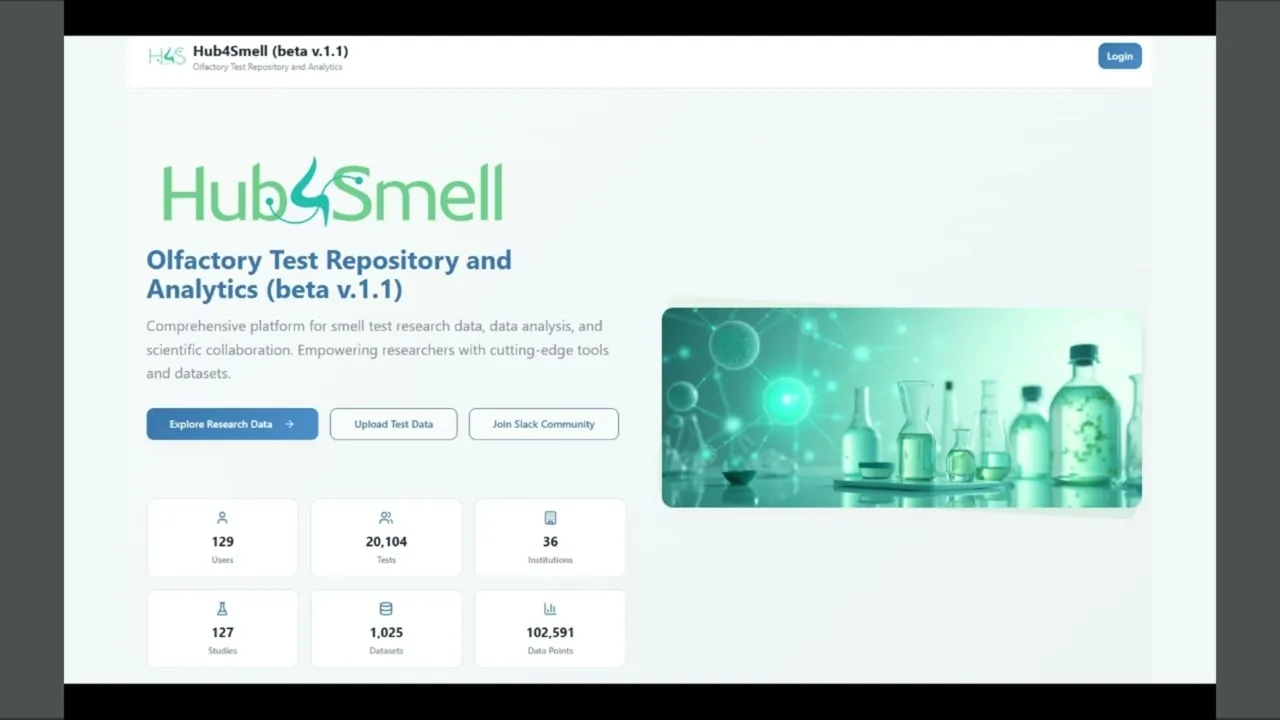
Estenda Solutions is building Hub4Smell, a project designed to bring olfactory science into modern healthcare.
Hub4Smell is a collaboration led by the Monell Chemical Senses Center, Ahersla Health, and Estenda Solutions. Each partner brings unique strengths that move the field forward.
Monell contributes decades of sensory science expertise. They are the leading independent research center dedicated to taste and smell. Their work guides our understanding of molecular biology, neuroscience, and human sensory function.
Ahersla Health focuses on medical devices for smell testing and therapy. They work to make these tools accessible to everyone, not just research communities.
Estenda Solutions provides the digital backbone. With more than 20 years of experience in digital health software development, Estenda delivers the data management systems, AI-enabled analytics, and secure infrastructure that support olfactory research and clinical use.
This partnership reflects a shared mission to elevate olfactory health to a global priority. Through Hub4Smell, researchers, clinicians, and public health teams can access standardized tools that expand what we know and how we act.
If you work in life sciences, healthcare, medtech, or research, you know how essential data quality is. Estenda helps turn smell testing into structured information that clinicians can interpret, researchers can analyze, and health systems can use for population insights.
The goal is simple. Make smell testing practical, scalable, and meaningful.
Ready to Improve Your Digital Health Strategy? Book Your Free 30 Minute Consultation
If you want expert guidance on how to integrate data, AI-powered analytics, or digital health platforms into your organization, our team at Estenda is here to support you. With more than 22 years of experience, hundreds of completed projects, and dozens of peer-reviewed publications, we deliver solutions rooted in evidence and built for real-world impact.
Contact us today at info@estenda.com to schedule your free 30-minute consultation. Let us help you take your next step with confidence.
Disclaimer:
Research reported in this publication was supported by the National Institute on Deafness and Other Communication Disorders of the National Institutes of Health under Award Number R44DC022498. The content is solely the responsibility of the authors and does not necessarily represent the official views of the National Institutes of Health.